Motortech Consulting d.o.o. from Pula made a notable presentation at the first conference of the Croatian Association for the Development and Application of Hydrogen Fuel Cells
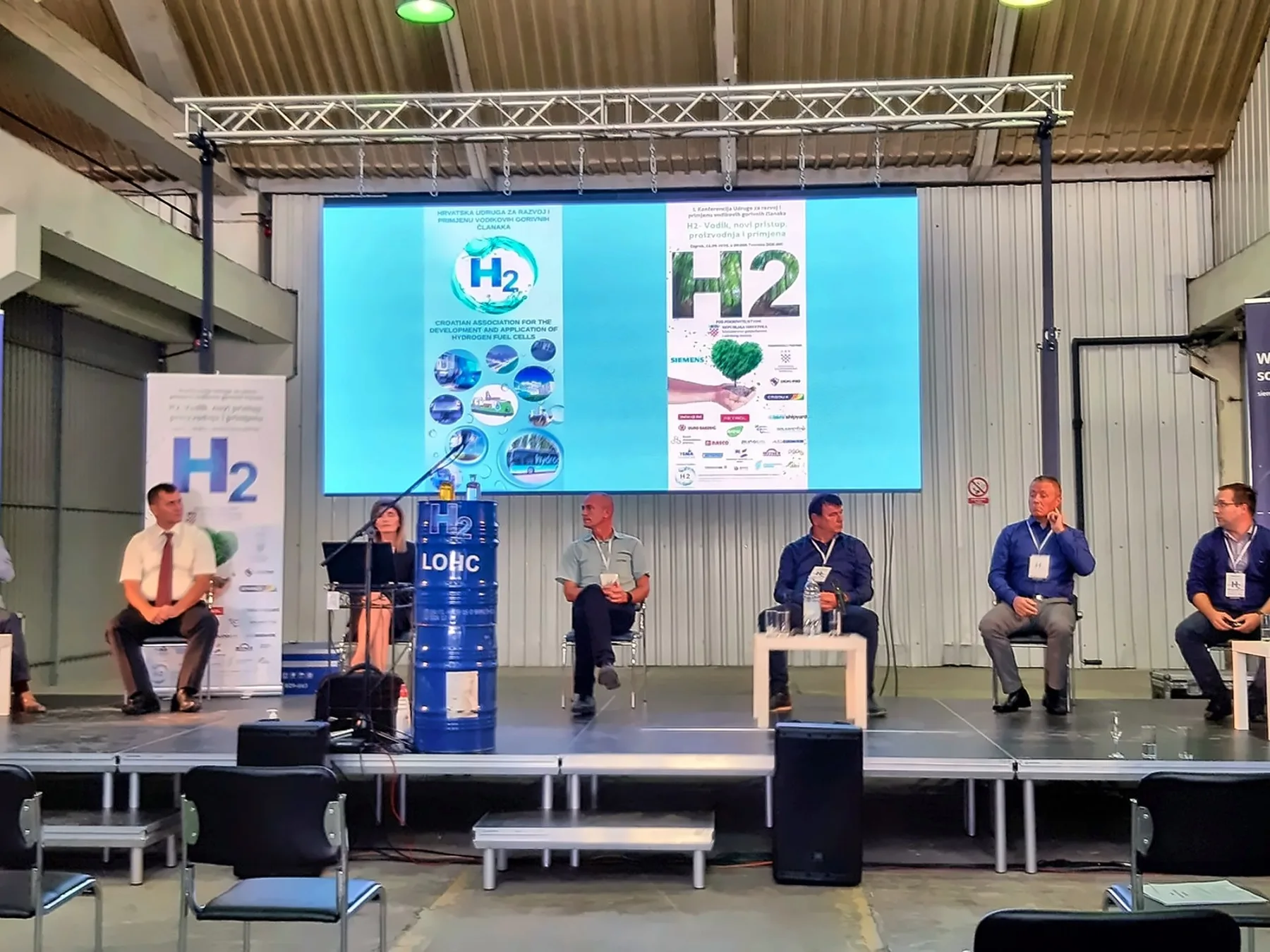
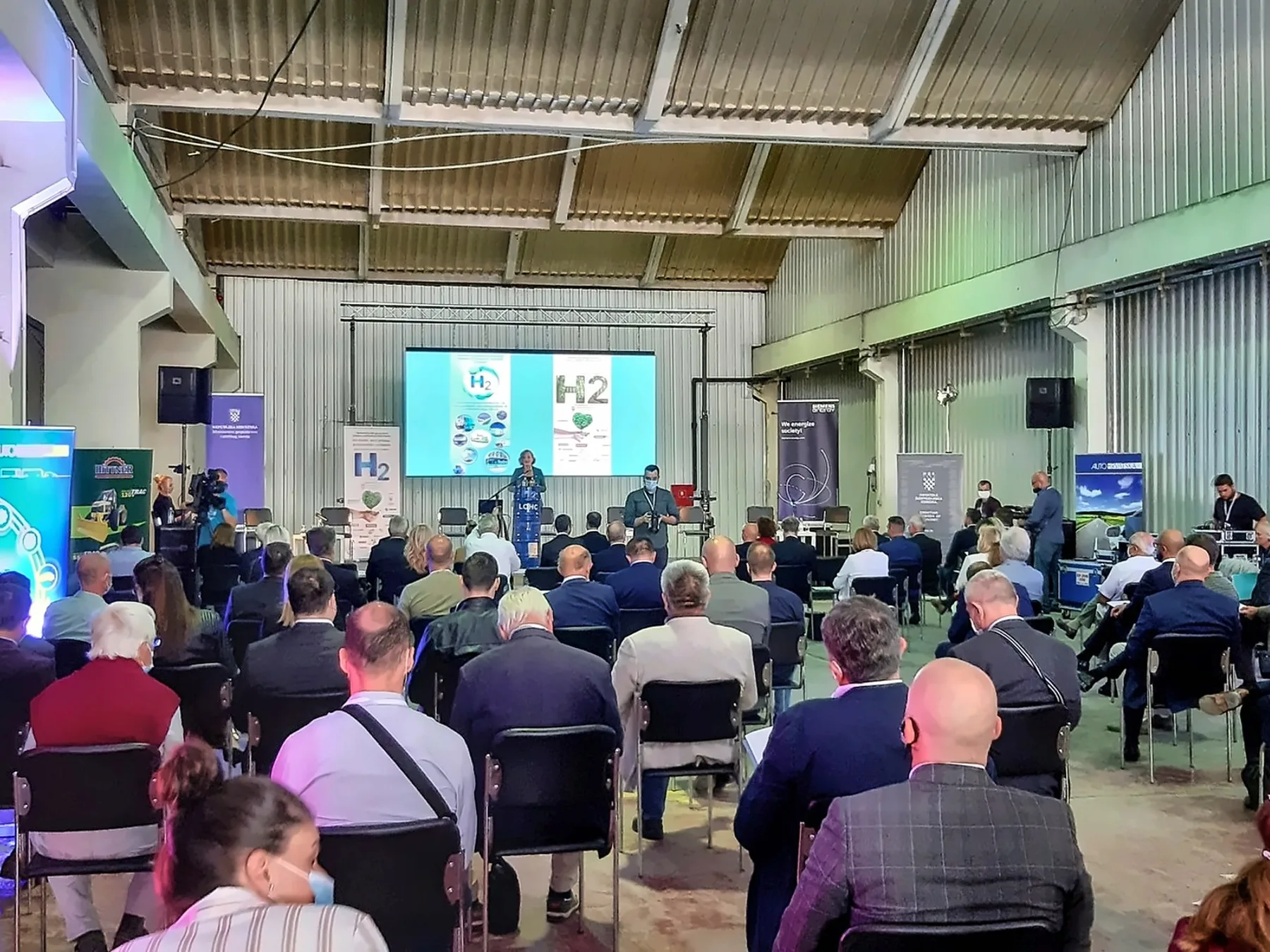
Last week, the first conference of the Croatian Association for the Development and Application of Hydrogen Fuel Cells was held in Zagreb.
The conference "H2-Hydrogen, a new approach, production and application" was held under the auspices of the Ministry of Economy and Sustainable Development and in partnership with the Croatian Chamber of Commerce.
The projects "Clean Hydrogen for Blue Danube and Green Slavonia" and "Clean hydrogen for the blue Adriatic " were presented to the audience.
Namely, although electricity for vehicles plays a central role in achieving the decarbonisation targets set by the European Union by 2050, investments in hydrogen from renewable sources in Europe could reach as much as 470 billion euros by that year.
Croatia is committed to meeting the target of 13.2% of renewable energy sources in transport by 2030, and the share of hydrogen would be 0.3 percent. Six pumping stations would be installed.
Today in Croatia there are a number of companies that deal with the design and development of technological solutions based on hydrogen as a green energy source.
That is why the Croatian Hydrogen Association chose the premises of DOK-ING d.o.o., a pioneer in the development of innovative technological solutions, for the place of its first conference. Thus, the owner and founder of the company DOK-ING Vjekoslav Majetić had the opportunity to present the work of the company so far and part of the success they have achieved on the world market. He also unveiled modifications to the company’s Tom-Tom vehicle, a lightweight electric delivery vehicle powered by a hydrogen fuel cell.
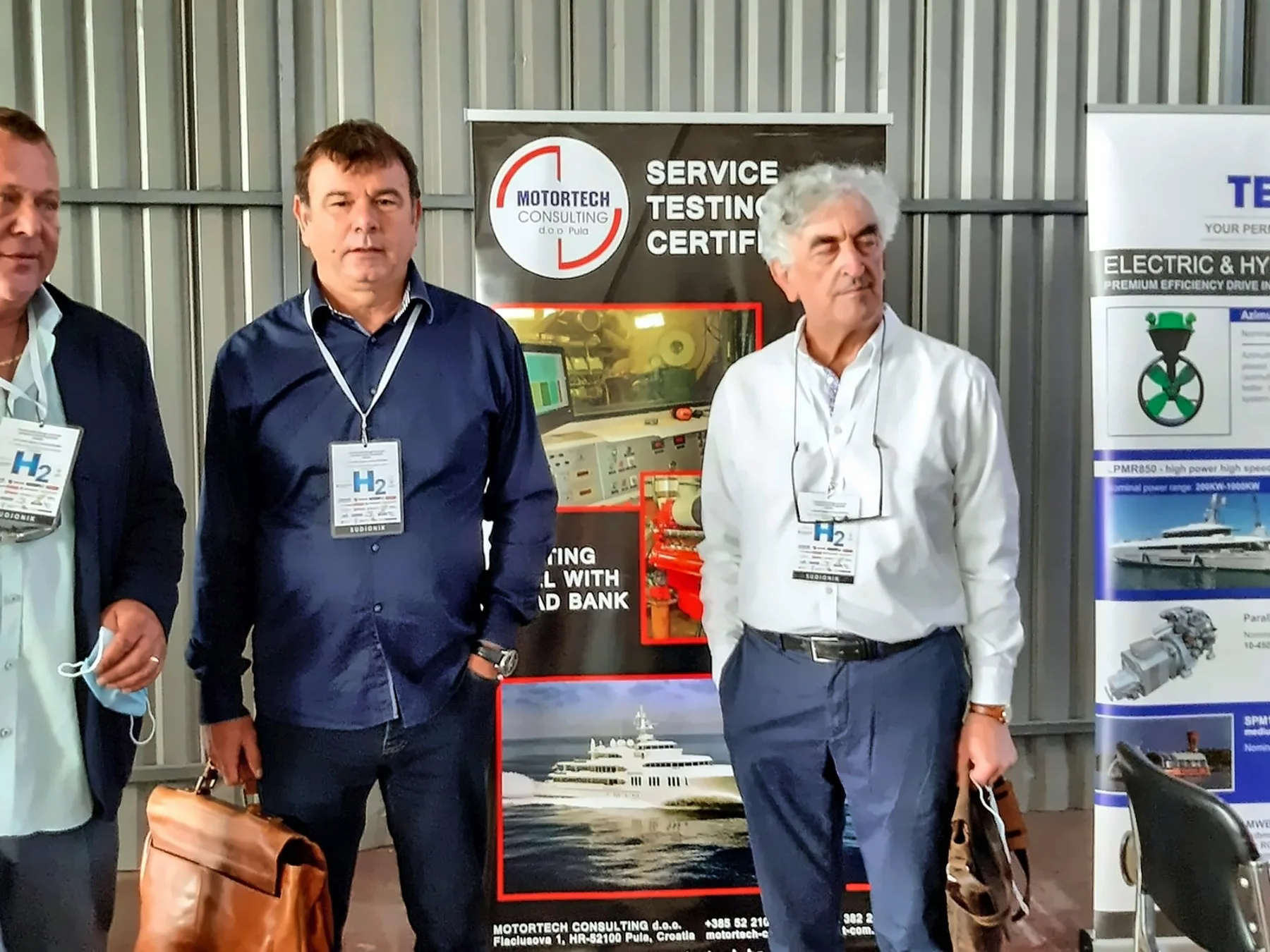
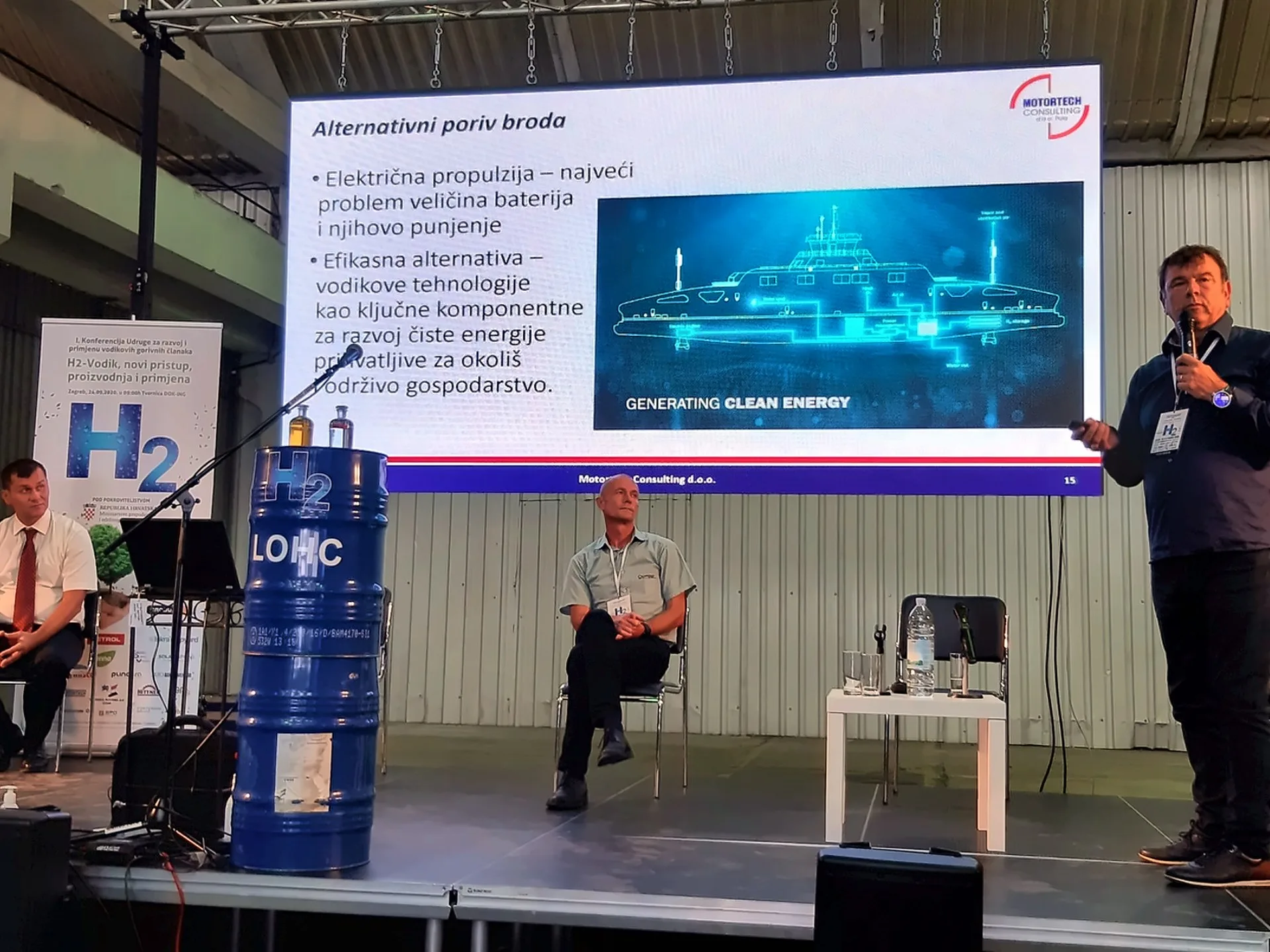
A number of eminent experts in the field of energy and multimodal transport gave their presentations at the conference, among others the director of the Pula-based company Motortech Consulting d.o.o. Livio Bolković.
Mr. Bolković pointed out that electric propulsion, which is promoted as green energy in order to reduce pollution, actually carries a number of challenges, since electricity used to charge electric vehicle batteries is actually most often produced from fossil fuel power plants and nuclear power plants, and even part of the energy obtained from renewable energy sources, such as photovoltaic cells, is questionably "green" due to the non-ecological way of producing these cells.
Therefore, the main issue of e-mobility is the issue of hydrogen production and its use as an energy source for electric vehicles. A hydrogen vehicle is actually an electric vehicle (or vessel) that uses a hydrogen fuel cell instead of a battery that produces electricity when needed and where needed from a hydrogen tank.